

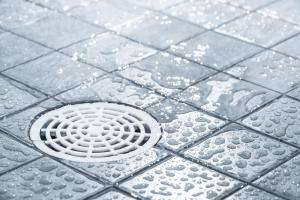
Bathrooms in Dubai homes, including yours, are usually carefully designed with attention to every detail, except one. At a glance, these bathrooms will appear luxurious, featuring statement fixtures such as a freestanding bathtub, rainfall showerhead, and perhaps even a backlit mirror. You had probably even thought about the marble veining and brushed gold finishes, but not the floor drain. This is precisely where things go wrong.
The floor drain is one of those decisions homeowners hand off to the contractor without another thought, asking them to pick out something functional and whatever fits. However, a poorly chosen floor drain can easily turn into a nightmare that causes endless plumbing problems, besides ruining the visual continuity of a carefully designed bathroom. The drainage problems, hygiene issues, and, in the worst cases, water damage can easily make you regret the neglect that you showed in the initial stage, where you could have prevented it all.
At Tapsmore, we have seen multiple clients who have approached us with this exact issue, and hence, know firsthand how this one small oversight can destroy the aesthetics of a beautiful home with one careless decision. Choosing the right floor drain is more than just letting the water leave the room, but also about odor control, architectural symmetry, and preventing the structural damage that can occur in the UAE’s extreme climate.
Why the Floor Drain Is More Important Than You Think
The floor drain is everything: a design element, a hygiene component, a structural decision, and, more importantly, a functional necessity. A simple choice of how your drain is designed determines how water moves across your floor, how the tiling layout works, what types of maintenance you will be doing over the years, and whether your bathroom looks finished or a little off.
Unlike European countries, in Dubai, where the bathroom interiors in apartments and villas are hold to a visual standard, a basic-looking drain grate sitting in the middle of a large-format porcelain floor can look and feel very much out of place. On the other hand, a tilaebe floor drain or a well-placed linear drain can make the entire space look seamless.
Beyond looks, drainage performance is directly related to safety. Poor drainage means stagnant water, which means slipping hazards. It can also allow sewer gases to enter your living space, making your entire living space stink. In a market where hotel-grade bathroom standards have become the benchmark for premium residential spaces, this is not a detail you want to overlook.
Floor Drain Types: The Evolution of the Modern Floor Drain
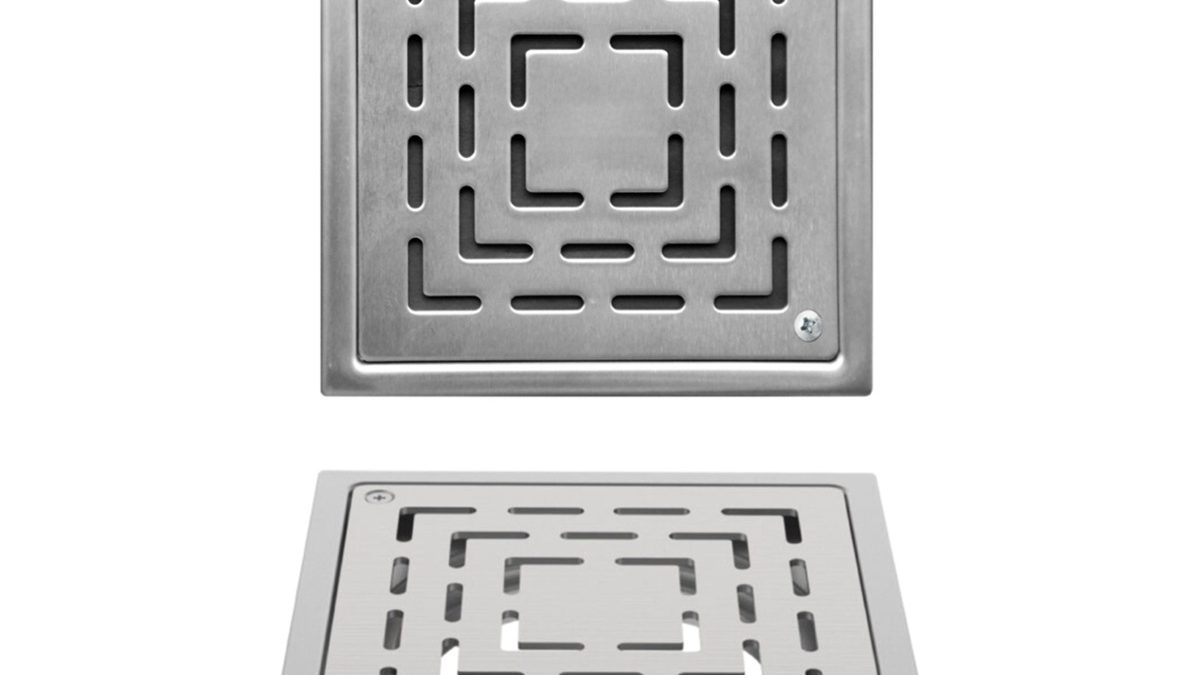
In the olden days, it was the circular plastic drain grate that yellows over time. Now, it has evolved into a design element that is as important as every other element that makes up your bathroom. At Tapsmore, our customers can choose from a wide variety of floor drain designs, starting from shower channels to square floor drains and linear floor drains in various sizes, finishes, designs, and tileable versions, with both vertical and horizontal installation solutions available for new builds and renovations.
| Drain type | Best application | Visual impact |
|---|---|---|
| Point drain | Small shower cubicles or utility areas | Visible square or circular grate |
| Linear drain | Large walk-in wet-room showers | Sleek, modern, and high-capacity |
| Tile-insert drain | Minimalist, high-end luxury designs, design-forward bathrooms | Nearly invisible; only a thin gap is seen |
| Side-wall drain | Wet rooms with continuous floor patterns | Zero floor obstructions; drains into the wall |
| Square (standard) | Utility areas, general bathrooms | Visible with low tile flexibility |
- Square floor drain: square two-piece and three-piece floor drains are the simplest and most popular options. They are usually installed in common areas within a home, including kitchens and bathrooms, and are available in sizes 10×10 cm or 15×15 cm. They are made from high-grade stainless steel with a vertical drainage outlet. Compared to other types, square floor drains are practical, affordable, and easy to install. That said, they are very visible on the floor, which can be a drawback in design-focused spaces.
- Tileable floor drain: compared to the square one, tileable floor drains are design-oriented solutions for common areas and shower areas. Only slight gaps will be visible between the tiles on the floor through which the water flows. If visual continuity is your priority, tileable floor drains are your go-to.
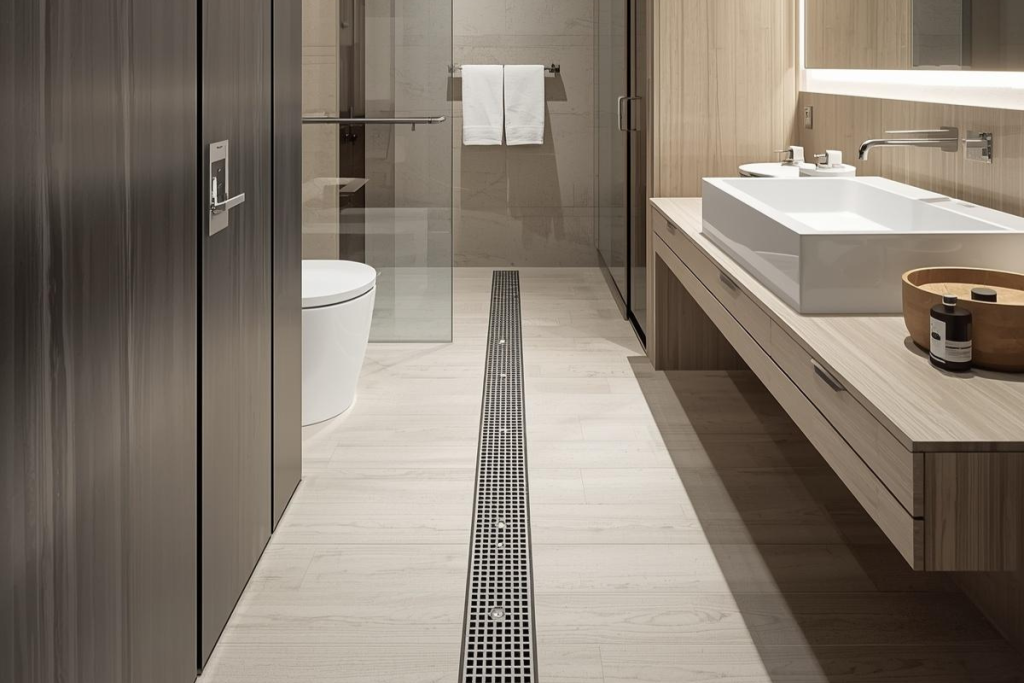
- Linear floor drain (shower channel): These are primarily used in shower areas. They are available in a variety of sizes with horizontal or vertical drainage outlets. Linear drains allow the floor to slope in a single direction rather than toward a central point, which opens up more flexibility in tiling layouts and creates a genuinely contemporary look.
Common Design Mistakes Most Dubai Homeowners Make While Choosing Their Floor Drain
- Choosing the drain last: The floor drain decision is not something you should postpone until the end, but should be decided on before the floor tiling begins. The position, size, and type of the drain determine how the floor tiles are cut and how the floor slopes are laid out. Changing the drain type after tiling has started is expensive and disruptive.
- Ignoring the slope direction: Your bathroom floor needs to slope toward the drain. With a central square floor drain, tiles slope inward from all sides. With a linear floor drain placed along one wall, the entire floor slopes in a single direction, which is simpler to execute and far cleaner in appearance.
- Aesthetics over grade: Not all stainless steel floor drains are equally functional. Sure, looks are important, but so is function and quality. Tapsmore’s floor drains are manufactured from the best-grade materials that are tested and approved before they are supplied. Cheaper alternatives you often come across in the market are made using lower-grade steel that corrodes or changes color within a short span, especially in a place like Dubai with high humidity and temperature.
- Overlooking the trap: A proper eating seal trap is a critical component to consider when selecting your floor drain. It prevents the sewer gases from entering your bathroom. This is a hygiene as well as a safety issue that is surprisingly common in renovations where drainage is not treated scientifically. So, always make sure that the drain you select has a proper odor trap.
Checklist for Your Floor Drain Shopping
- Have you decided which drain type you want before tiling begins?
- Is the drain position marked on the floor?
- Have you confirmed the floor slope direction with your contractor?
- Does the drain include a water seal?
- Is the drain size right for the volume of water in your bathroom?
- Have you bought the drain from a supplier who provides a warranty and documentation?
Frequently Asked Questions
1. Can I change my floor drain after tiling is done?
You can, but the process is a lot more complicated. The surrounding tiles often need to be removed to access and modify the drain position or type. It is always better to finalise the drain selection before the floor is laid.
2. How do I prevent bad smells coming from the floor drain?
The most common cause for stinking bathrooms is a dried-out water seal in the trap. Make sure your drain has an integrated or compatible odour trap. In bathrooms that are not used every day, pour water into the drain periodically to keep the seal active.
3. Which floor drain finish should I choose?
The best way to do this is to match your floor drain finish to your other bathroom fittings. Consistency across fixtures and hardware is what makes a bathroom look intentional and well-designed.